
3 days with kids in...
OSLO
The Ultimate Family Guide (2026)
Getting to Oslo: The Airport Train
Oslo Gardermoen Airport (OSL) is about 50 kilometres north of the city centre, and getting in is refreshingly straightforward.
The Flytoget Airport Express Train
The fastest and most comfortable option is the Flytoget — Oslo’s dedicated airport express train. It runs every 10 minutes during peak hours, takes exactly 19 minutes to Oslo Central Station (Oslo S), and costs 230 NOK per adult (approximately $22 USD). Children under 16 travel free with a paying adult. You can buy tickets at the airport, at the station, or through the Flytoget app. The trains are clean, modern, and have luggage racks — perfect for families arriving with full suitcases.
The Vy Regional Train (Budget Option)
If you want to save money, the Vy regional train (formerly NSB) runs the same route for around 113 NOK per adult ($11 USD) and takes about 23 minutes. It stops at more stations but is perfectly comfortable. Buy tickets through the Vy app or at the station.
From Oslo Central Station to Anker Hotel
Once you arrive at Oslo S, Anker Hotel is a 15-minute walk northeast through the city. Head up Storgata — the hotel is at number 55. Alternatively, take Tram 11, 12, or 13 from Jernbanetorget (right outside Oslo S) two stops to Brugata. The hotel is a two-minute walk from there. A taxi from the airport costs approximately 700–900 NOK ($65–85 USD) and takes 30–45 minutes depending on traffic.
Practical Tip:
Buy an Oslo City card (Ruter single ticket) for the tram — it costs 42 NOK per adult and children under 6 travel free. Download the Ruter app before you arrive to buy tickets digitally and avoid queues.
Where to Stay: Top 4 Family Hotels in Oslo
Anker Hotel ⭐⭐⭐⭐
Storgata 55, 0182 Oslo | Book here
Thon Hotel Rosenkrantz ⭐⭐⭐⭐
Rosenkrantz’ gate 1, 0159 Oslo | Book on Booking.com
Right in the city centre, a five-minute walk from the Royal Palace and Karl Johans Gate. The Thon chain is Norway’s most trusted hotel brand and the Rosenkrantz is one of their best family options — spacious rooms, excellent breakfast, and a location that puts you within walking distance of almost everything. Expect to pay 1,800–2,500 NOK per night ($170–240 USD) for a family room.
Scandic Vulkan ⭐⭐⭐⭐
Maridalsveien 13, 0178 Oslo | Book on Booking.com
A design-forward hotel in the trendy Vulkan district, right next to Mathallen Oslo (the city’s best food hall) and the Akerselva river. Excellent for families who want a more contemporary feel and easy access to great food. Family rooms are well-sized and the location is superb. Rates from 1,600–2,200 NOK per night ($150–210 USD).
Scandic Holmenkollen Park ⭐⭐⭐⭐⭐
Kongeveien 26, 0787 Oslo | Book on Booking.com
Getting to Scandic Holmenkollen Park from the City Centre
Tip:
The T-bane ride up to Holmenkollen is itself a highlight — the train climbs through dense pine forest and the views open up dramatically as you approach the top. Even if you are not staying at the hotel, the journey up to Holmenkollen is worth doing for the ski jump views alone.
History Box: The Name Oslo
Oslo is one of Europe’s oldest capital cities, with settlements dating back to around 1000 AD. But for over 300 years, it was not called Oslo at all. In 1624, a devastating fire destroyed the medieval city. King Christian IV of Denmark (who then ruled Norway) ordered it rebuilt closer to Akershus Fortress and renamed it Christiania — after himself. The city kept that name (later spelled Kristiania) until January 1, 1925, when Norwegians finally voted to restore its original Norse name. Oslo comes from the Old Norse Ásló, meaning “the meadow beneath the ridge.”
Where to Eat: Top 3 Family Restaurants in Oslo
1. Illegal Burger
Møllergata 23, 0179 Oslo | illegalburger.com
Do not let the name fool you — this is one of the most family-friendly spots in Oslo. Illegal Burger serves what many locals consider the best burgers in the city: thick, juicy, made with quality Norwegian beef, and served in a loud, fun, casual atmosphere that children absolutely love. The menu is straightforward (burgers, fries, shakes), the staff are relaxed and welcoming with kids, and the prices are reasonable by Oslo standards — expect to pay around 180–220 NOK per person ($17–21 USD) including a drink. No reservations needed; just walk in.
2. Mathallen Oslo
Vulkan 5, 0178 Oslo | mathallen.no
Mathallen is Oslo’s covered food market — a beautiful converted industrial building on the Akerselva river housing around 30 food stalls and restaurants. It is perfect for families because everyone can eat what they want: Norwegian open sandwiches, sushi, pizza, Thai food, artisan cheese, fresh pastries. The atmosphere is relaxed and buzzy, there is plenty of space, and children can wander and explore while you eat. Saturday mornings here are particularly special. Budget around 150–250 NOK per person ($14–24 USD).
3. Kafe Celsius
Rådhusgata 19, 0158 Oslo | celsius.no
Tucked inside one of Oslo’s oldest buildings (dating to 1626), Kafe Celsius is a charming, cosy restaurant with exposed brick walls, candlelight, and a menu of Norwegian classics — fish soup, reindeer stew, open sandwiches, and excellent cakes. The atmosphere is warm and unhurried, the staff are patient with children, and the food is genuinely good. It is a wonderful place to introduce kids to Norwegian cuisine in a setting that feels like stepping back in time. Mains run 200–280 NOK ($19–27 USD).
Trivia Box: The Viking Connection
Oslo was founded in approximately 1049 by King Harald Hardrada — the same Harald who was defeated at the Battle of Stamford Bridge in England in 1066, just days before William the Conqueror’s victory at Hastings. The Viking Ship Museum (Vikingskipshuset) on the Bygdøy peninsula houses three of the world’s best-preserved Viking ships, all found buried as funeral vessels in the Oslo Fjord region. The Oseberg ship, built around 820 AD, is considered the finest example of Viking craftsmanship ever discovered.
Top 5 Things to Do in Oslo with Kids
1. Vigeland Sculpture Park (Vigelandsparken)
2. The Viking Ship Museum (Vikingskipshuset)
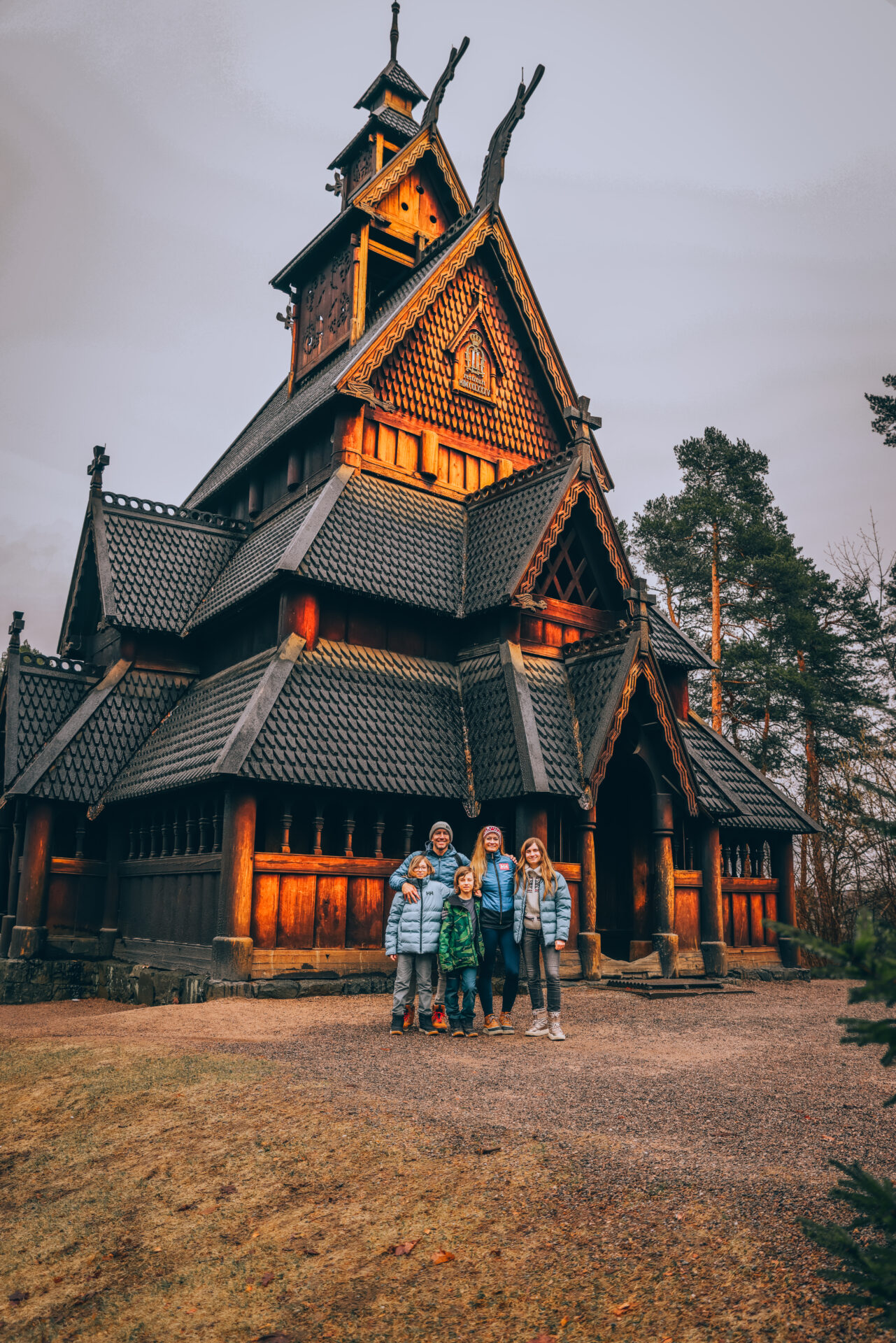
3. The Norwegian Folk Museum (Norsk Folkemuseum)
4. The Fram Museum (Frammuseet)
5. The Oslo Opera House (Operahuset)
Oslo Weather: Spring and Summer
Spring (March, April, May)
Summer (June, July, August)
Trivia Box: Oslo's Green Credentials
Oslo is consistently ranked among Europe’s greenest capitals. Over two-thirds of the city’s total area is covered by forests, parks, and green spaces — including the vast Nordmarka forest that begins right at the edge of the city. Oslo was also the world’s first city to create a “bee highway” — a continuous route of flower boxes, green roofs, and wildflower patches running through the urban environment to support the city’s bee population. In 2019, Oslo was named European Green Capital by the European Commission.
Practical Tips for Families
