| City | Nights | Don't Miss |
|---|---|---|
| Tokyo | 5 | DisneySea, TeamLab, Skytree, Meiji Jingu, Kamakura day trip |
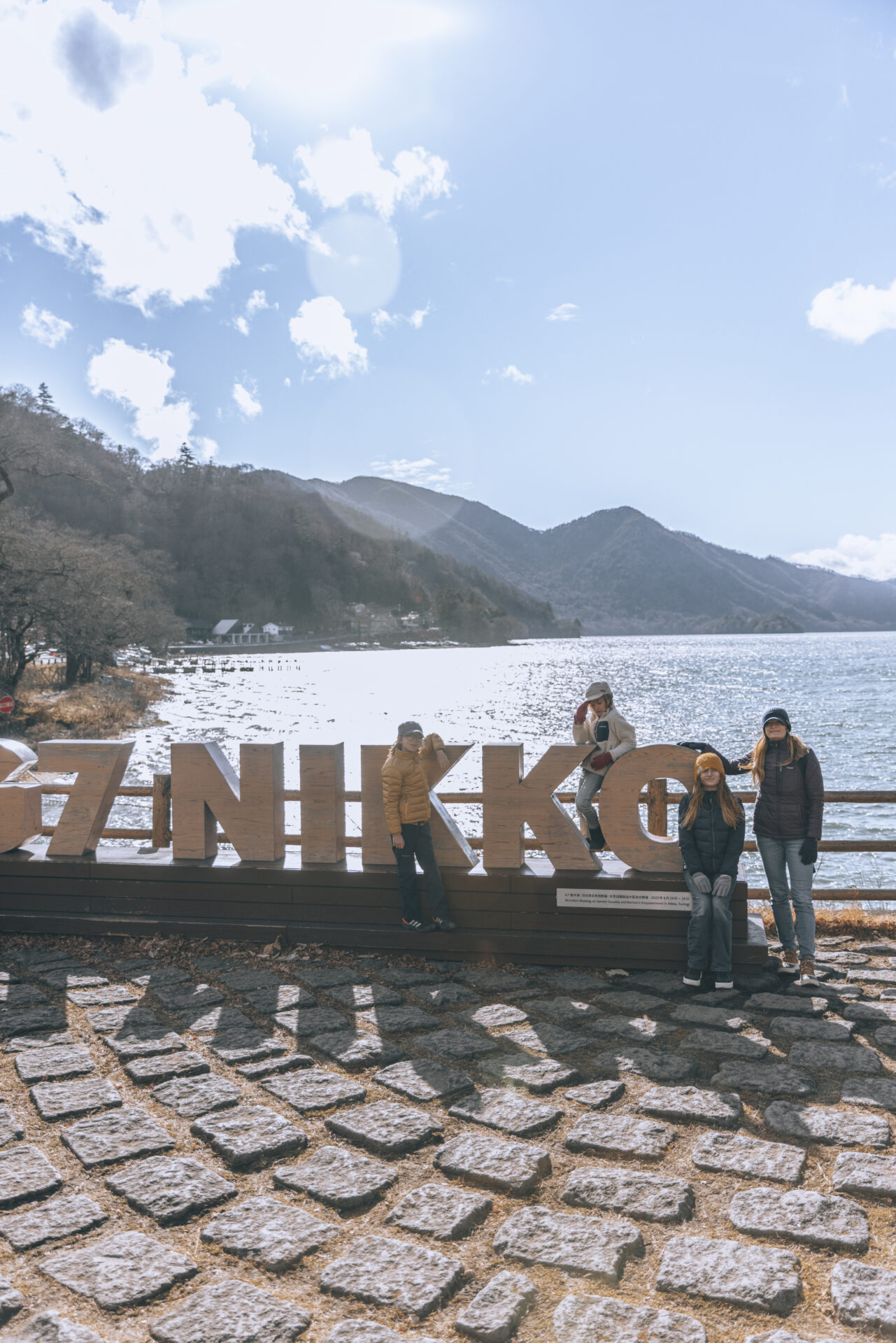
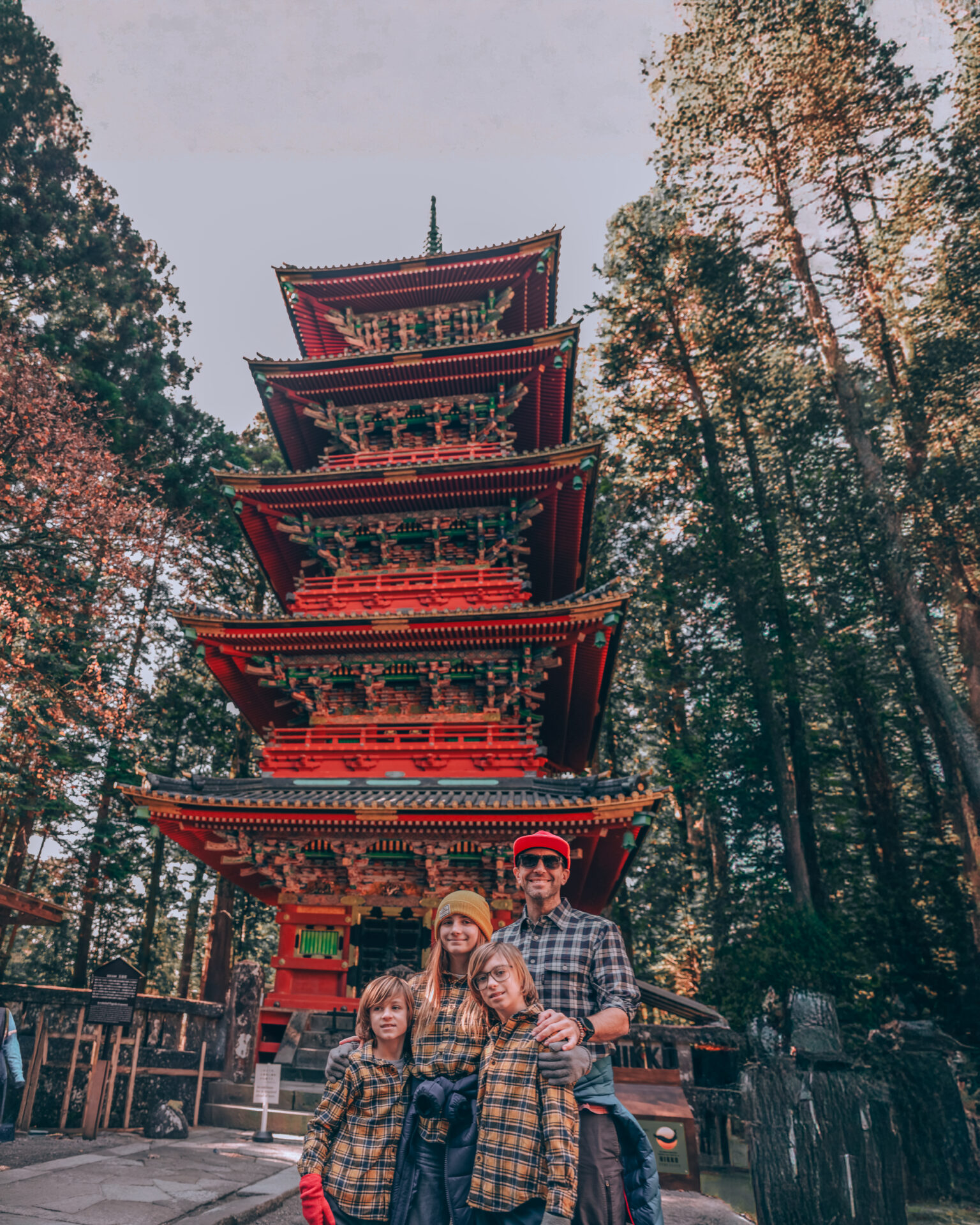
| Nikko | 2 | Tōshōgū Shrine, Kegon Falls, Edo Wonderland, Three Wise Monkeys |
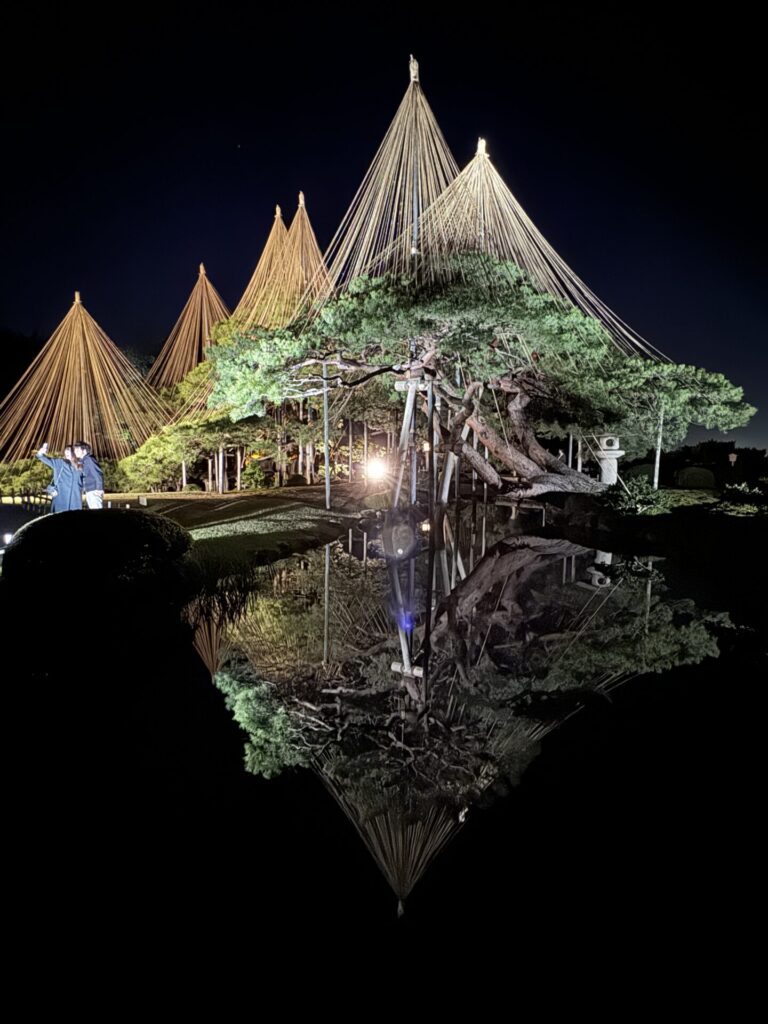
| Kanazawa | 2 | Kenroku-en, Ninja Temple, Higashiyama, gold leaf ice cream |
| Kyoto | 4 | Kinkaku-ji, Kiyomizu-dera, Samurai training, Kimono rental, Ninenzaka |
| Osaka | 3 | Universal Studios, Dotonbori, Nara day trip, Hanshin Tigers baseball |
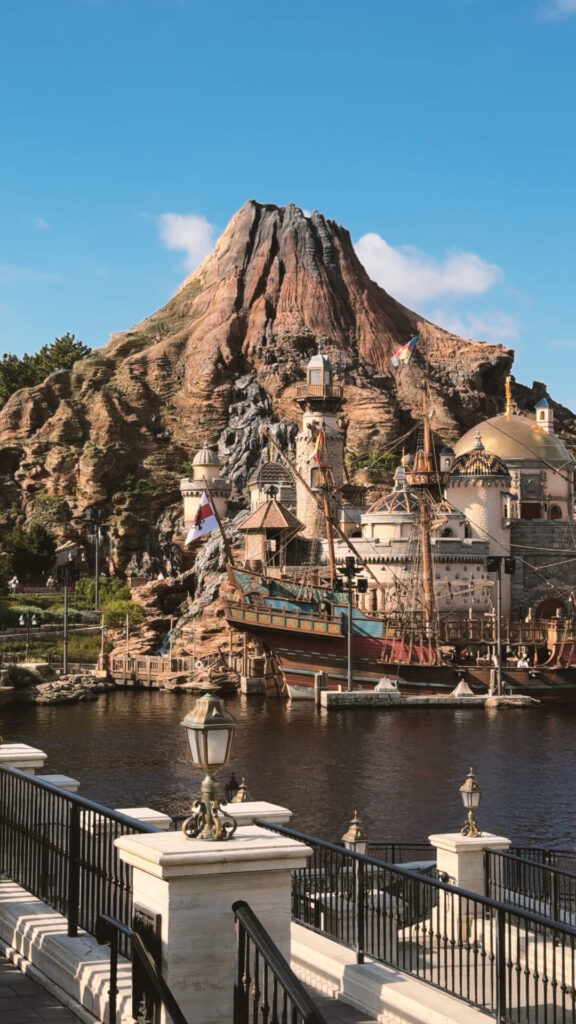
This was the undisputed highlight of Tokyo for our kids, and honestly for us too. DisneySea is unlike any Disney park in the world — it is built around the theme of the sea and exploration, with seven distinct “ports of call” ranging from a Jules Verne-inspired volcanic island to a Mediterranean harbour. The theming is extraordinary, the rides are genuinely thrilling for older kids, and the food is miles above what you find at Disney parks elsewhere. We paid around $70 USD per person for tickets booked in advance online — and yes, every single dollar was worth it. Book well ahead, especially in peak season.
Tokyo is home to two TeamLab immersive art experiences and we did both. TeamLab Borderless (recently reopened in Azabudai Hills) is a labyrinthine world of digital art installations where light, sound, and movement blur together in ways that are genuinely hard to describe. Our kids ran through it with their mouths open. TeamLab Planets in Toyosu is smaller but arguably even more visceral — you walk barefoot through rooms of water and light that feel like stepping inside a dream. Tickets for both are around $25–30 USD per person and must be booked in advance. Do not skip either.
At 634 metres, the Skytree is the tallest tower in Japan and the second tallest structure in the world. The views from the observation decks are staggering — on a clear day you can see all the way to Mount Fuji. We went in the late afternoon and stayed for sunset, which was spectacular. Tickets are around $15–20 USD per person. The Skytree is located right in Asakusa, so it was a short walk from our hotel.
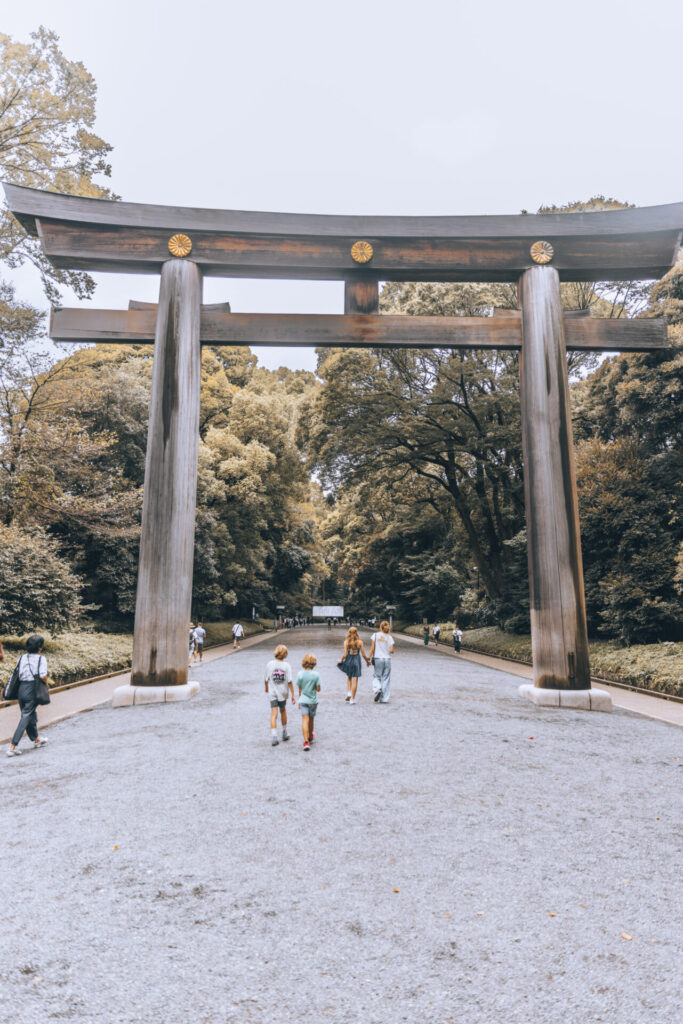
In the middle of Tokyo, surrounded by 170 acres of forested park, Meiji Jingu is one of the most serene places we visited in the entire country. The walk through the towering torii gate and along the forested path to the shrine feels genuinely removed from the city around it. Entry is free, and it is a wonderful contrast to the sensory overload of the rest of Tokyo. Go early in the morning before the crowds arrive.
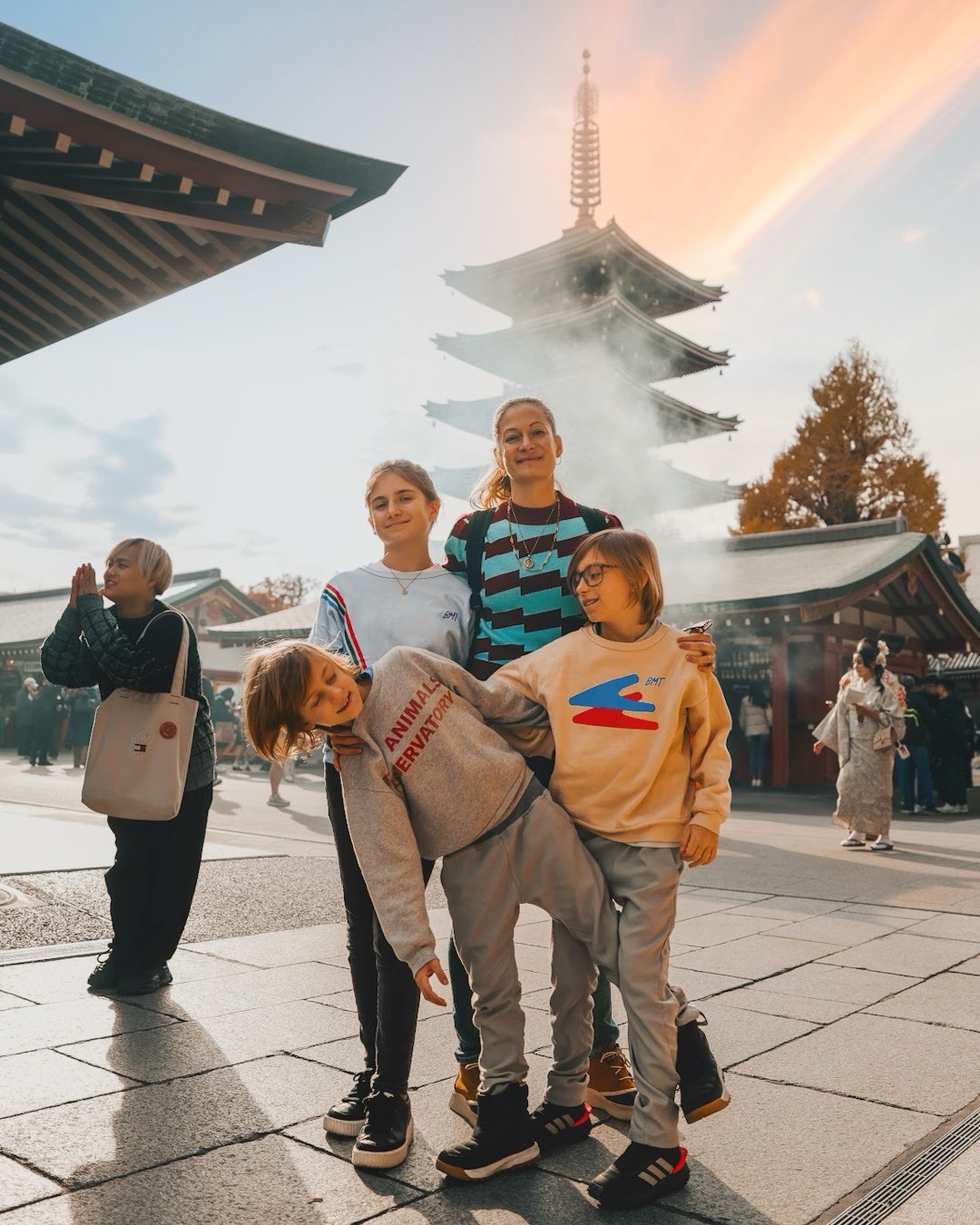
Right on our doorstep in Asakusa, Senso-ji is Tokyo’s oldest temple and one of its most visited — but it earns the crowds. The approach along Nakamise-dori is lined with stalls selling everything from traditional snacks to beautifully crafted souvenirs, and the kids loved drawing omikuji (fortune-telling paper slips) from the wooden boxes at the temple. Go at dawn or dusk to see it at its most magical.
We took the train south of Tokyo to Kamakura for a full day and it was one of our favorite days of the entire trip. The Great Buddha (Kotoku-in) is genuinely awe-inspiring — 13 metres of bronze sitting serenely in the open air, and you can actually go inside it for a small fee. Hase-dera Temple is beautiful, the coastal town is charming, and the kids loved the deer-free alternative to Nara (though we did Nara too — more on that later). The train from Tokyo takes about an hour and costs around $10 USD each way.
Japan broke our kids’ food habits in the best possible way. In Tokyo we did it all: conveyor belt sushi (kaiten-zushi) at a proper automated restaurant where you order on a tablet and the plates come flying down a lane to your table; a robot café in Shinjuku; ramen at a tiny counter restaurant where you order from a vending machine at the door; tamagoyaki (sweet rolled omelette) at Tsukiji Outer Market at 7am; and the most extraordinary street food in Asakusa — ningyo-yaki (little cakes filled with red bean paste), melon bread, and freshly grilled skewers. We also did karaoke one evening in a private booth, which became an instant family tradition.
We spent a full afternoon in Shibuya and Harajuku. The Shibuya Crossing is as overwhelming and spectacular as advertised — watch it from the Starbucks window above for the full effect. Harajuku is all about the food and the fashion: the cotton candy here is the size of a small child’s head, the rainbow grilled cheese is absurd and delicious, and the kids could have spent hours in the shops along Takeshita Street.
Ueno Park is one of Tokyo’s great free gifts. It contains multiple world-class museums (the Tokyo National Museum is superb), a zoo, a large pond with rowing boats, street food vendors, and enough space for the kids to run around and decompress after days of intense sightseeing. We went on a weekday morning and had it largely to ourselves.
Nikko sits about two hours north of Tokyo by train and feels like a completely different world. Nestled in the mountains of Tochigi Prefecture, it is home to some of Japan’s most ornate and spectacular shrines and temples, a thundering waterfall, and — one of our absolute favourite experiences of the trip — a full-scale Edo period theme park. We almost skipped Nikko to spend more time in Tokyo. We are so glad we did not.
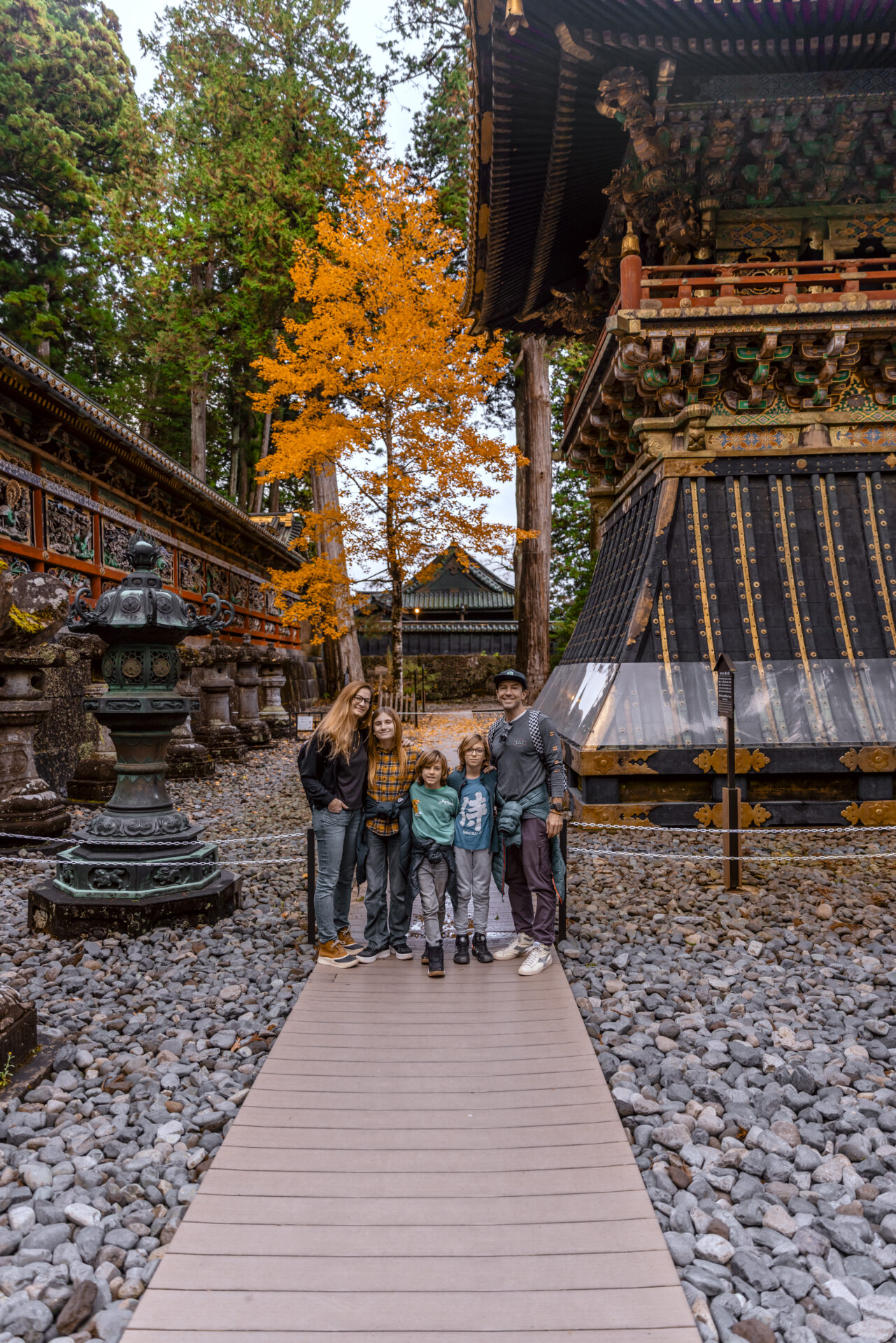
Tōshōgū is the mausoleum of Tokugawa Ieyasu, the founder of the Edo shogunate, and it is one of the most lavishly decorated religious sites in Japan. Every surface is carved, gilded, and painted — it is almost overwhelming in its detail. The complex sits in a cedar forest and the combination of the ancient trees and the extraordinary architecture is unlike anything else we saw in Japan. Entry is around $15 USD per adult, less for children.
Carved into the side of a stable building within the Tōshōgū complex, the original Mizaru, Kikazaru, and Iwazaru — see no evil, hear no evil, speak no evil — are here. The kids knew the symbol before we arrived and seeing the original carving was a genuine “oh WOW” moment. It is easy to miss if you are not looking for it, so make sure you find the Shinkyusha (Sacred Stable) building.
A short bus ride from the shrine complex, Kegon Falls drops 97 metres into a gorge and is one of Japan’s three great waterfalls. You can view it from the observation platform above for free, or pay around $6 USD to take the elevator down to the lower observation deck, which puts you right in front of the falls. The lower deck is worth every yen — the spray and the sound are extraordinary. The kids were speechless, which does not happen often.
Less visited than Tōshōgū but arguably even more atmospheric, Taiyū-in is the mausoleum of Tokugawa Iemitsu (grandson of Ieyasu) and sits deeper in the cedar forest. The approach through successive ornate gates, each more elaborate than the last, feels like a journey into another era. It is quieter than Tōshōgū and we found the whole experience more contemplative and moving.
This was one of the most purely fun days of the entire trip. Edo Wonderland is a living history theme park built to recreate life in Japan’s Edo period (1603–1868). You can dress up as a samurai or a ninja, watch ninja shows and acrobatic performances, try traditional crafts, walk through a recreated Edo-era town, and — the absolute highlight — visit the “Ninja Trick House,” a building full of optical illusions and hidden passages that had the kids shrieking with delight. Entry is around $25–30 USD per person. Allow a full day.
Kanazawa is one of Japan’s great underrated cities. Often called “Little Kyoto,” it escaped bombing during World War II and retains a remarkably intact historic core — geisha districts, samurai neighbourhoods, traditional gardens, and a castle — without the crowds that Kyoto now attracts. We loved it immediately and wished we had booked three nights.
Kenroku-en is considered one of Japan’s three great gardens and it fully earns the designation. The name means “garden of six attributes” — spaciousness, seclusion, artifice, antiquity, water, and views — and it delivers all six. We went in the morning when it was quiet and spent two hours wandering the paths, watching the koi, and sitting by the ponds. Entry is around $6 USD per adult; children under 18 are free. Do not miss the famous kotoji-toro stone lantern, which has become the symbol of Kanazawa.
Myōryū-ji is officially a Buddhist temple but it is known universally as the Ninja Temple, and for good reason. Built in the 17th century as a secret defensive stronghold for the Kaga domain lords, it is riddled with hidden rooms, secret staircases, trapdoors, a hidden well, and a pit that drops into an underground escape tunnel. The only way to visit is on a guided tour (in Japanese, but very easy to follow), and the tours are limited — book weeks in advance as they sell out consistently. Entry is around $8 USD per person. Absolutely unmissable for kids.
Adjacent to Kanazawa Castle, Gyokusen-inmaru is a smaller, more intimate garden than Kenroku-en and, in our opinion, even more beautiful. It was built for a feudal lord’s mother and every element — the stone arrangements, the tea house, the waterfall — has been placed with extraordinary precision. Entry is around $5 USD. Go in the late afternoon when the light is golden.
Higashiyama is one of three geisha districts (chaya) in Kanazawa and it is the most intact and atmospheric. The streets are lined with two-storey wooden ochaya (teahouses) where geisha once entertained wealthy merchants. Today you can walk the streets freely, visit a few of the teahouses that are open to the public, and — the kids’ favourite — try the gold leaf soft-serve ice cream from one of the stalls. Kanazawa produces 99% of Japan’s gold leaf and the locals put it on everything. The ice cream is extraordinary.
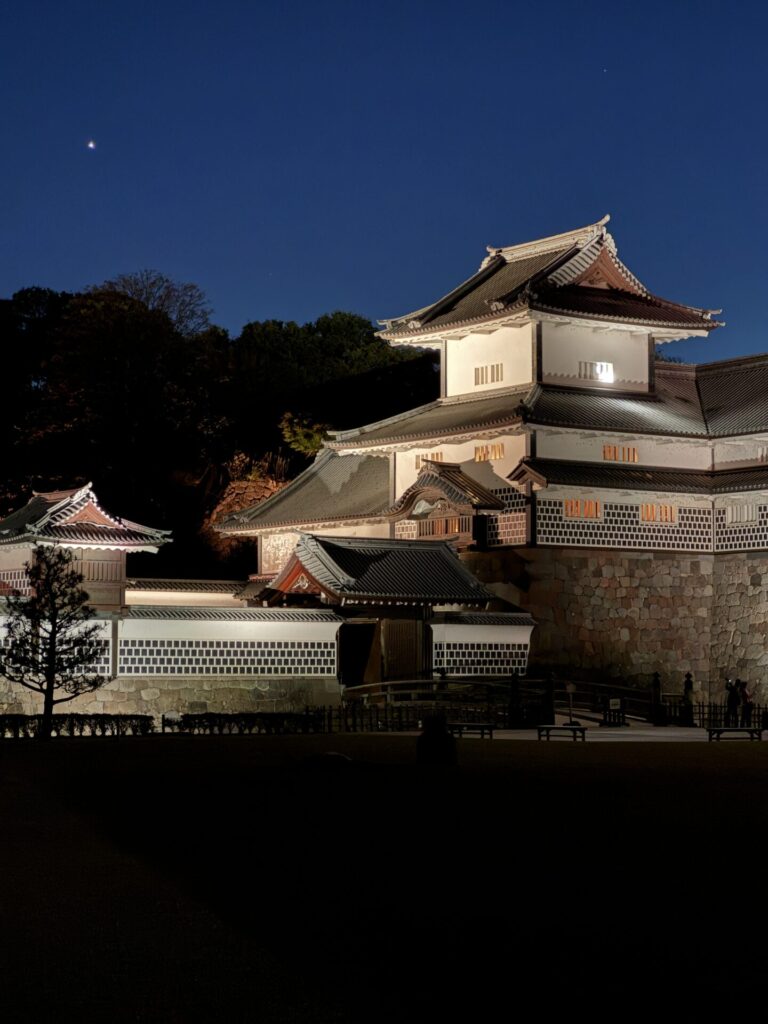
The castle itself was largely destroyed by fire and only partially reconstructed, but the grounds are beautiful and the remaining structures — particularly the Hishi Yagura turret and the Gojikken Nagaya storehouse — give a real sense of the original scale and grandeur. Entry to the park is free; the interior buildings cost around $5 USD. The park connects directly to Kenroku-en, making it easy to do both in a morning.
Kyoto is the soul of Japan. The former imperial capital for over a thousand years, it contains more UNESCO World Heritage Sites than any other city in the world. It is also, in summer, extremely hot and extremely crowded. Go early, stay late, and take afternoon breaks — and you will love it. We stayed in the Gion area, which put us within walking distance of the geisha district, Kiyomizu-dera, and Nishiki Market.
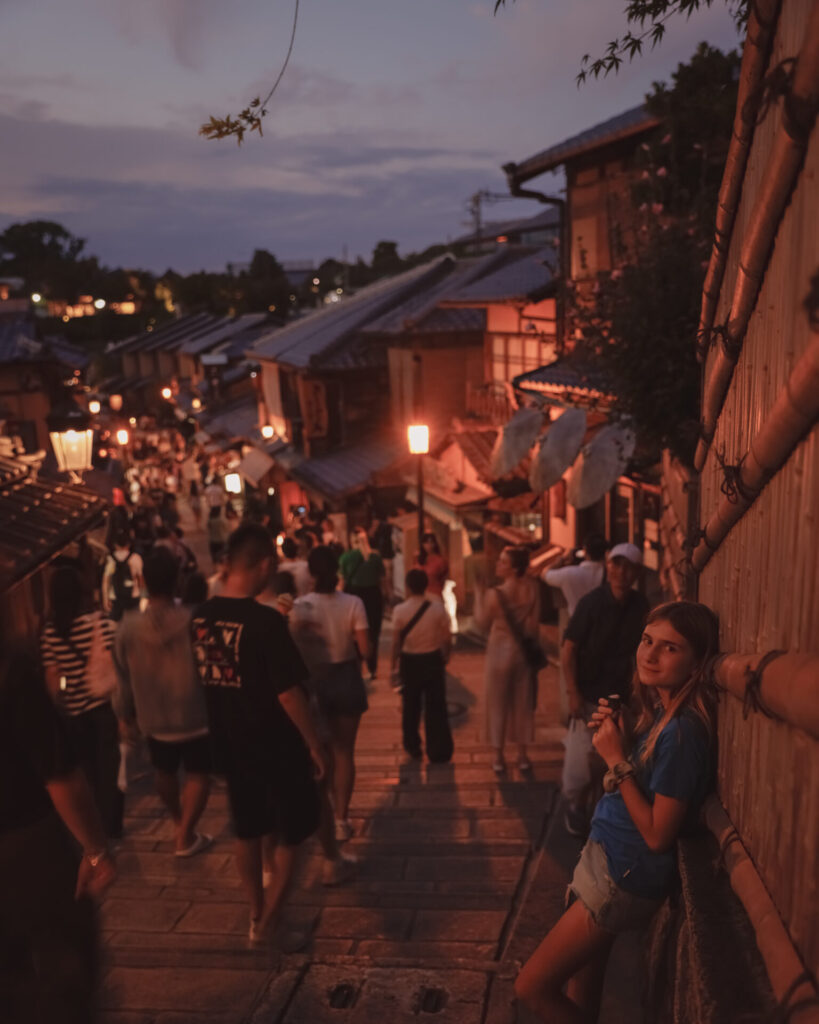
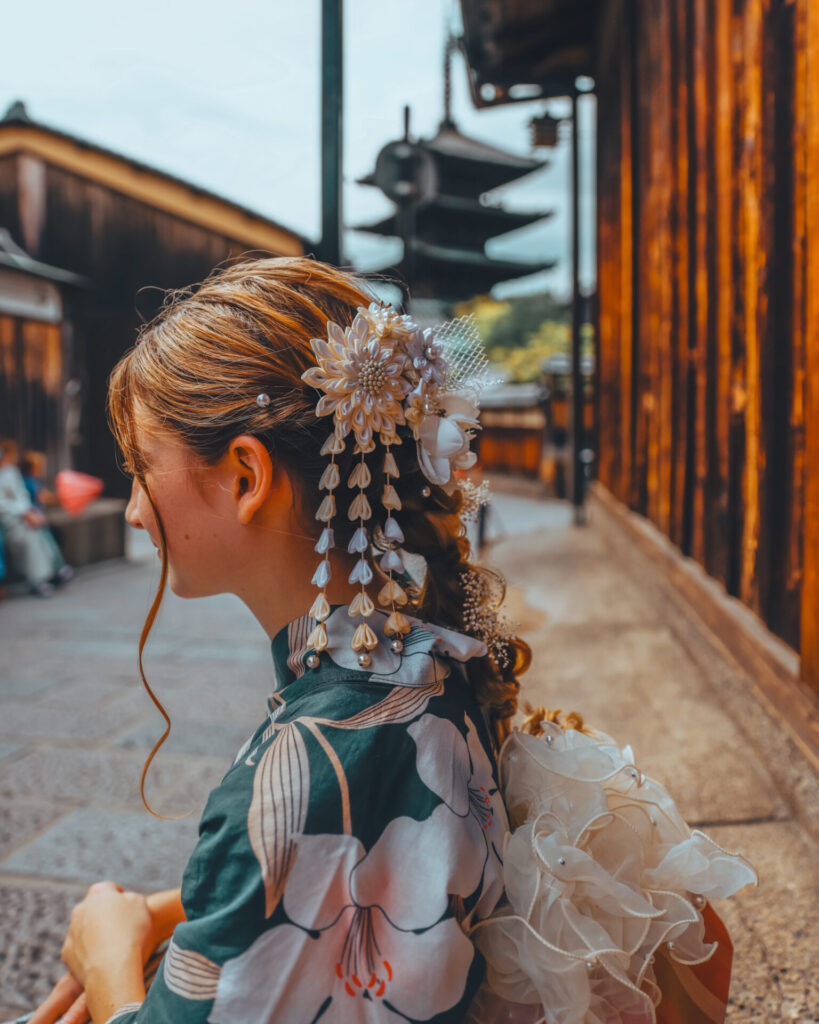
On our first morning in Kyoto we rented kimonos for the whole family and spent the day exploring the city in them. This sounds like a tourist cliché and it absolutely is — and it is also one of the best things we did in Japan. The rental shops are everywhere in Gion and Arashiyama, cost around $20–30 USD per person for a full day, and include dressing assistance, hair styling, and a small bag. Walking through Ninenzaka and Sannenzaka in a kimono, past the old wooden machiya townhouses, is an experience that photographs beautifully and feels genuinely immersive. The kids were obsessed.
These two stone-paved lanes — “Two-Year Slope” and “Three-Year Slope” — wind up through a beautifully preserved historic neighbourhood toward Kiyomizu-dera. The streets are lined with traditional wooden buildings housing tea shops, craft stores, and restaurants. They are busy during the day but magical at dawn or dusk. Wear your kimono here.
Kiyomizu-dera is built on the side of a mountain and its famous wooden stage — constructed without a single nail — juts out over the forested hillside with views across Kyoto. It is one of the most photographed spots in Japan and it earns every photograph. The approach up the hill through the souvenir streets is part of the experience. Entry is around $5 USD per person. Go early.
Kinkaku-ji is covered in real gold leaf and its reflection in the mirror pond in front of it is one of the most iconic images in Japan. It is busy — there is no getting around that — but the beauty of it stops you regardless. Go when it opens at 9am to beat the worst of the crowds. Entry is around $5 USD per person.
We booked a samurai training experience through one of the specialist schools in central Kyoto and it was one of the most memorable mornings of the entire trip. The instructor taught us basic sword stances, cutting techniques, and the philosophy of bushido (the samurai code) in a session that lasted about 90 minutes. The kids were completely absorbed. Several schools offer this experience; prices range from $40–80 USD per person. Book in advance.
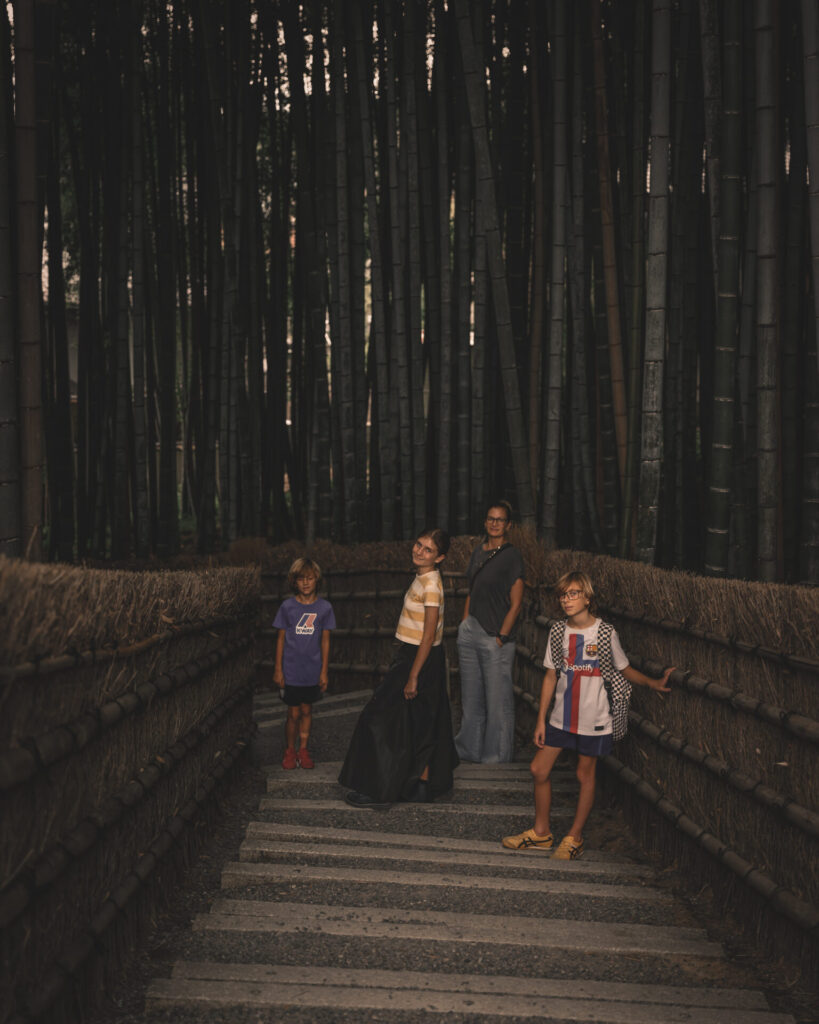
The bamboo grove at Arashiyama is genuinely extraordinary — the stalks rise 20 metres overhead and the light filtering through them creates an otherworldly atmosphere. It is also genuinely very crowded during the day. Go at 7am and you will have it largely to yourself. The surrounding Arashiyama neighborhood is beautiful — the river, the monkey park on the hill, the rental boats, and the food stalls make it a full half-day.
Thousands of vermilion torii gates winding up a forested mountain — Fushimi Inari is one of those places that exceeds every expectation. You can walk the full circuit to the summit (about 2–3 hours) or just explore the lower section (45 minutes). We went at dusk, which was cooler and far less crowded than daytime, and the atmosphere was genuinely magical. Free entry.
Known as “Kyoto’s Kitchen,” Nishiki is a narrow covered market running five blocks through central Kyoto, lined with stalls selling pickles, tofu, fresh seafood, street snacks, and every ingredient of traditional Kyoto cuisine. We went twice — once to explore and once to eat our way through it. The tamagoyaki skewers, the fresh mochi, and the grilled skewers were the kids’ favourites.
Osaka is Tokyo’s louder, funnier, more food-obsessed cousin. The people are warmer and more outgoing, the food is extraordinary, and the city has an energy that is entirely its own. We based ourselves in Namba, which put us right in the heart of Dotonbori and within easy reach of everything.
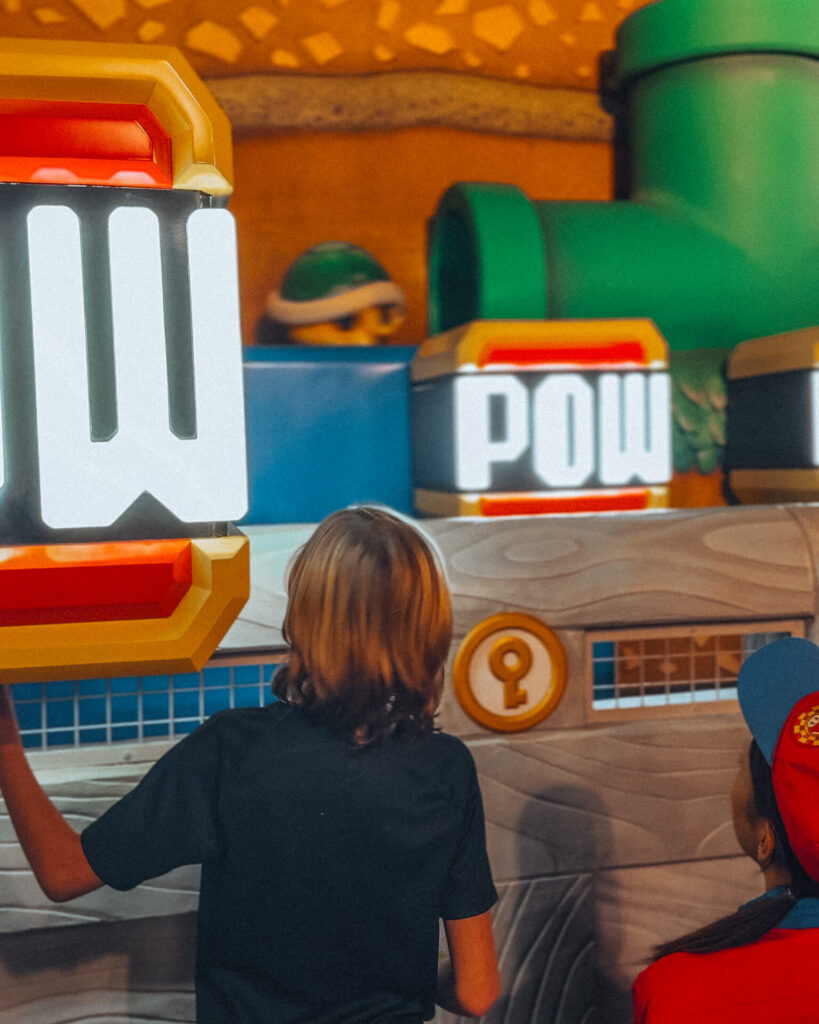
USJ is genuinely world-class. The Wizarding World of Harry Potter is spectacular, Super Nintendo World (the Mario-themed land) is unlike anything else in any theme park on earth, and the new Donkey Kong Country section that opened in late 2024 is extraordinary. We spent a full day and could have used two. Tickets are around $70–90 USD per person; book well in advance and consider an Express Pass for peak season. Go on a weekday if you can.
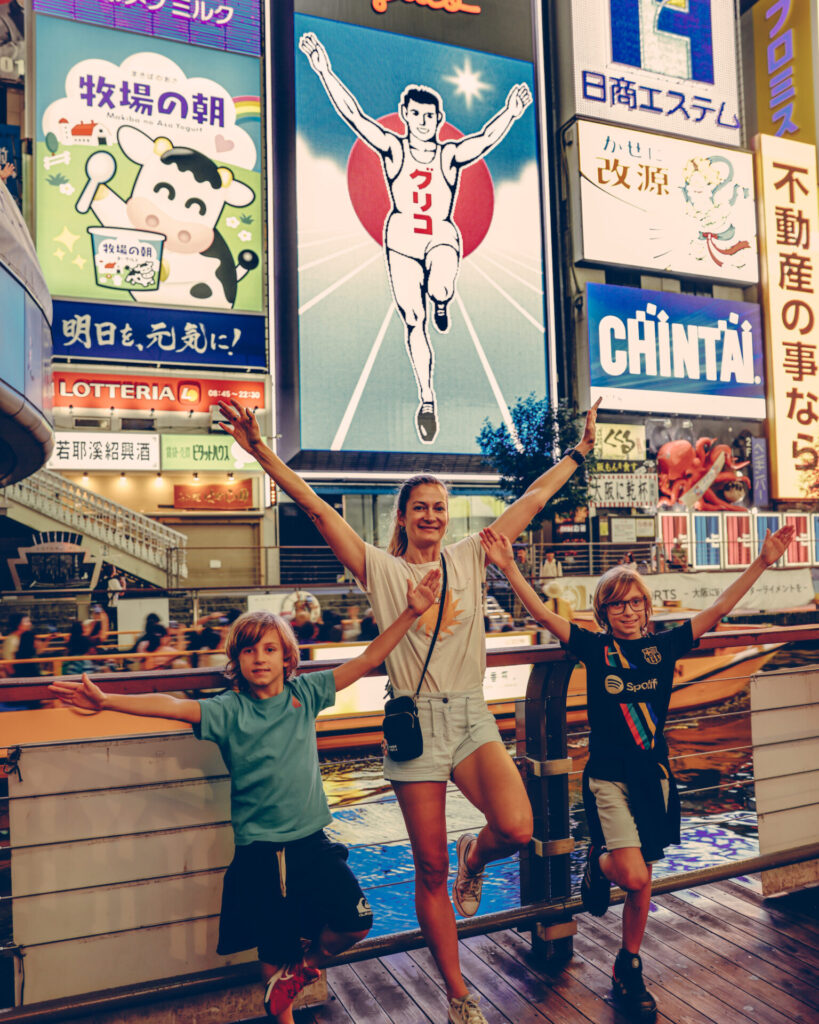
Dotonbori is Osaka’s famous entertainment district — a canal lined with neon signs, enormous mechanical crabs and puffer fish, takoyaki stalls, ramen shops, and the kind of cheerful chaos that makes you grin involuntarily. We walked it every evening. The Glico Running Man sign is the photo everyone takes; the takoyaki (octopus balls) from Dotonbori Kukuru are the thing everyone should eat. The kids had their first okonomiyaki (savoury pancake) here and declared it one of the best things they had ever eaten.
Nara is 45 minutes from Osaka by train and it is one of the most joyful days you can have in Japan. The deer of Nara Park are officially considered sacred messengers of the gods and they roam completely freely through the park and surrounding streets. They bow for deer crackers (shika senbei), which you buy from vendors for around $2 USD, and the kids were absolutely beside themselves. Tōdai-ji Temple — home to Japan’s largest bronze Buddha — is within the park and is extraordinary. Go on a weekday to avoid the weekend crowds.
We caught a Hanshin Tigers game at Koshien Stadium and it was one of the most unexpectedly wonderful experiences of the trip. Japanese baseball culture is unlike anything in the West — every at-bat has its own chant, the crowd sings in perfect unison, the cheerleaders are extraordinary, and the atmosphere is electric. The Tigers are Osaka’s team and their fans are famously passionate. Tickets are very affordable (around $15–30 USD), the stadium food is excellent, and the whole experience is pure joy. Check the schedule before you book your trip and try to build a game into your itinerary.
Osaka Castle is one of Japan’s most famous landmarks and the museum inside tells the story of Toyotomi Hideyoshi and the unification of Japan in a way that is genuinely engaging even for kids. The castle grounds are beautiful and the view from the top floor is excellent. Entry is around $6 USD per person. The surrounding park is a lovely place to decompress.
Kuromon is Osaka’s famous food market — 150 stalls selling fresh seafood, wagyu beef, produce, and street food. We went for breakfast and ate our way from one end to the other: fresh oysters, grilled scallops, wagyu skewers, and the best tuna sashimi any of us had ever tasted. It is busy but not overwhelming, and the vendors are welcoming and happy to let you try things.
|
Route
|
Details
|
Estimated Cost
|
|
Madrid (MAD) → Tokyo Narita (NRT)
|
Return, x5 passengers. We flew with a combination carrier (e.g. KLM/Air France via Amsterdam, or Finnair via Helsinki). Economy class.
|
$5,500–7,500 total ($1,100–1,500 per person)
|
|
Hotel
|
Nights
|
Rooms
|
Est. Cost
|
|
ENT Terrace Akihabara, Tokyo
|
3
|
1
|
~$486
|
|
COCOSHUKU Asakusa Kuramae, Tokyo
|
2
|
1
|
~$500
|
|
Rakuten STAY Nikko Hoden
|
2
|
1
|
~$750
|
|
Hyatt House Kanazawa
|
2
|
2
|
~$800
|
|
The Hotel Osaka Bay
|
3
|
1
|
~$285
|
|
Akari Kyoto
|
4
|
1
|
~$700
|
|
TOTAL ACCOMMODATION
|
16 nights
|
|
~$3,521
|
|
Item
|
Details
|
Estimated Cost
|
|
JR Pass (14-day)
|
x2 adults + x3 children (children 6–11 pay half; under 6 free). Covers Shinkansen Tokyo–Nikko–Kanazawa–Kyoto–Osaka and all JR lines.
|
~$1,400 (2 adult passes ~$560 each + children’s passes ~$90 each x3)
|
|
IC Cards (Suica/ICOCA)
|
Loaded with approx. $30 each for local metro, buses, convenience stores. x5 cards.
|
~$150
|
|
Airport transfers (Narita → Tokyo, Osaka → Narita)
|
Flytoget equivalent (N’EX train) x5 each way
|
~$200
|
|
Taxis / local transport not covered by JR Pass
|
Occasional taxis, Kyoto buses, Osaka metro
|
~$150
|
|
TOTAL TRANSPORT
|
|
~$1,900
|
|
Meal Type
|
Daily Estimate
|
16-Day Total
|
|
Breakfasts (mix of hotel buffets + konbini)
|
$25/day
|
~$400
|
|
Lunches (ramen, soba, conveyor belt sushi, konbini)
|
$50/day
|
~$800
|
|
Dinners (sit-down restaurants, izakayas, one splurge per city)
|
$100/day
|
~$1,600
|
|
Snacks, street food, ice cream, vending machines
|
$30/day
|
~$480
|
|
TOTAL FOOD
|
~$205/day
|
~$3,280
|
|
Activity
|
City
|
Cost for Family of 5
|
|
DisneySea
|
Tokyo
|
~$600 (1-day tickets)
|
|
teamLab Planets
|
Tokyo
|
~$175
|
|
teamLab Borderless
|
Tokyo
|
~$175
|
|
Tokyo Skytree
|
Tokyo
|
~$100
|
|
Kamakura day trip (Great Buddha entry)
|
Kamakura
|
~$25
|
|
Edo Wonderland
|
Nikko
|
~$175
|
|
Tōshōgū Shrine complex
|
Nikko
|
~$50
|
|
Kegon Falls observation deck
|
Nikko
|
~$25
|
|
Kenroku-en Garden
|
Kanazawa
|
~$25
|
|
Myouryuji Ninja Temple
|
Kanazawa
|
~$40
|
|
Samurai training experience
|
Kyoto
|
~$150
|
|
Kinkaku-ji (Golden Pavilion)
|
Kyoto
|
~$20
|
|
Kiyomizu-dera
|
Kyoto
|
~$25
|
|
Kimono rental x5
|
Kyoto
|
~$250
|
|
Universal Studios Japan
|
Osaka
|
~$500
|
|
Nara day trip (Todai-ji entry)
|
Nara
|
~$30
|
|
Hanshin Tigers baseball game
|
Osaka
|
~$100
|
|
Misc (Ueno Park, Meiji Jingu, Osaka Castle, Fushimi Inari — all free or low cost)
|
Various
|
~$50
|
|
TOTAL ACTIVITIES
|
|
~$2,515
|
|
Category
|
Estimated Cost
|
|
Souvenirs (magnets, toys, Kit Kat flavours, ceramics)
|
~$300
|
|
Clothing / fashion (Harajuku, Shinsaibashi)
|
~$200
|
|
Books, manga, anime merchandise (Akihabara)
|
~$150
|
|
TOTAL SHOPPING
|
~$650
|
|
Item
|
Estimated Cost
|
|
Travel insurance (family policy, 16 days)
|
~$200
|
|
Pocket WiFi rental (16 days)
|
~$80
|
|
Luggage forwarding (takkyubin, 2–3 shipments)
|
~$60
|
|
Pharmacy / toiletries
|
~$50
|
|
TOTAL MISC
|
~$390
|
|
Category
|
Estimated Cost
|
|
|
$5,500–7,500
|
|
|
$3,521
|
|
|
$1,900
|
|
|
$3,280
|
|
|
$2,515
|
|
|
$650
|
|
|
$390
|
|
TOTAL (mid-range estimate)
|
~$17,756–19,756
|
|
Per person
|
~$3,551–3,951
|
|
Per day
|
~$1,110–1,235/day for the family
|